

China
How China and Gulf States are Influencing Central Asia’s Energy Transition
China and Gulf states are increasing renewable energy investments in Central Asia, particularly Kazakhstan and Uzbekistan, while promoting complementary competition. Central Asia’s decarbonization depends on governments diversifying partners and shaping investment terms.
Renewable Energy Investment in Central Asia
China and Gulf states are intensifying their renewable energy investments in Central Asia, particularly in Kazakhstan and Uzbekistan. By engaging in complementary competition, these nations aim to enhance their influence while maintaining distinct roles in clean energy initiatives. While such foreign investments can propel the region’s decarbonization efforts, they also bring dependency risks. The key to success lies in the ability of regional governments to diversify their partners and define investment conditions.
Since the Belt and Road Initiative (BRI) was launched in 2013, China has evolved into a leading overseas energy investor. The post-pandemic era has marked a notable pivot towards renewables, especially in developing regions. Concurrently, Gulf states have also significantly increased their investment in clean energy projects, particularly in Central Asia, an area historically rich in hydrocarbon resources.
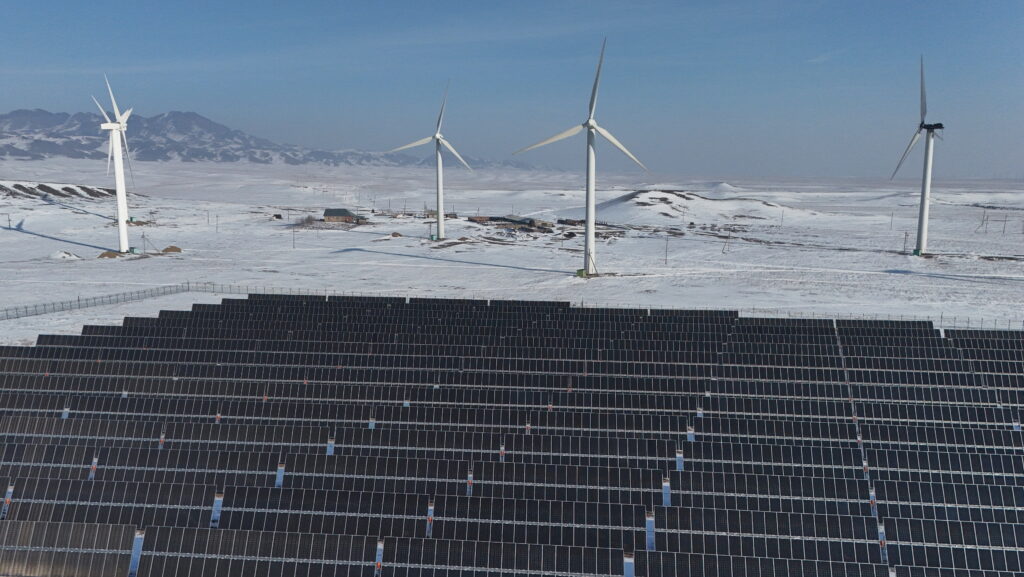
Kazakhstan stands out as the primary beneficiary of Chinese clean energy financing, attracting $4.6 billion in BRI investments in 2024, much of which is directed toward renewable projects. Key initiatives include the 100 MW Zhanatas wind farm and several solar installations in the Karaganda and Almaty regions. Companies like Masdar from the UAE and Saudi Arabia’s ACWA Power are similarly developing wind farms and battery storage in Kazakhstan, further diversifying its energy landscape.
Source : How China and the Gulf states are shaping Central Asia’s energy transition


