

China
U.S. to China: ‘Stop Interfering in Tibetan Religion’
The U.S. government urged China to halt its interference with Tibetan religious freedom after reports of demolitions at a monastery in eastern Tibet. Officials assert these actions aim to control religious practices and suppress Tibetan identity under the new Ethnic Unity Law.
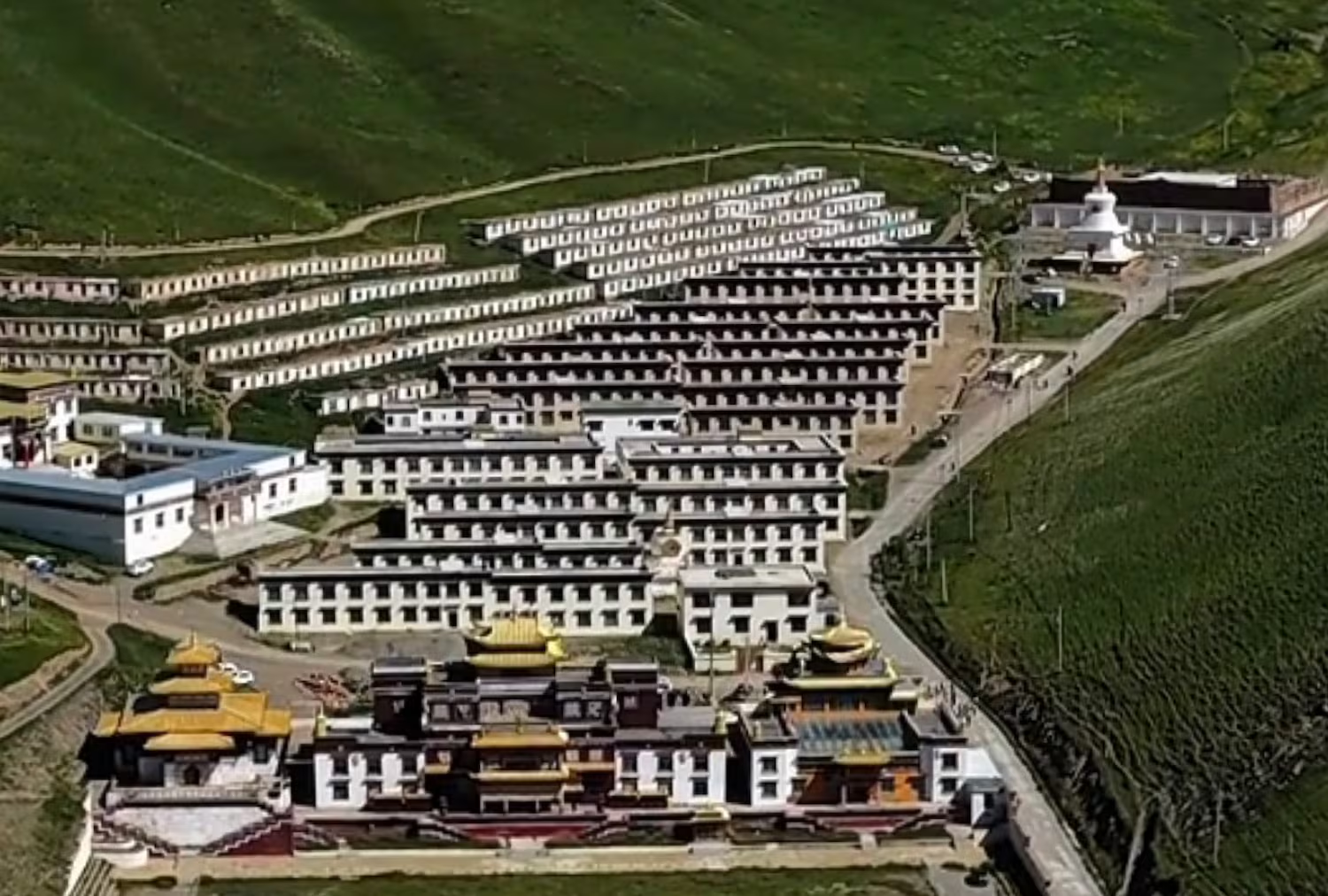
The U.S. government Thursday urged China to stop interfering with Tibetan religious freedom after sources in eastern Tibet told Radio Free Asia that Chinese authorities began demolishing monks’ quarters at a monastery there.
Authorities on Oct. 25 and 26 began demolishing about 200 monks’ residences at Dza Sershul Thekchen Dargyeling Monastery in Sershul County in the Kardze (Ganzi in Chinese) Tibetan Autonomous Prefecture, sources there told RFA, speaking on the condition of anonymity for security reasons.
“Everything is over now,” the source said. “We are losing everything.”
A U.S. State Department spokesperson told RFA on Thursday that the demolitions in Sershul reflect broader Chinese government efforts to bring spiritual institutions, religious education, and monastic life under government control.
“We call on Beijing to end its interference in Tibetan religious life,” the spokesperson said. “Tibetan Buddhists should have the right to practice their faith freely, educate their clergy and choose their religious leaders, including the Dalai Lama and the Panchen Lama, without government interference,” the spokesperson said, referring to Beijing’s past and likely future interference with the established succession customs of the two most important figures in Tibetan Buddhism.
The demolition in Sershul is not isolated, but part of a larger campaign to reduce monk populations at Tibetan religious institutions. RFA reported in August that authorities resumed demolition of the Larung Gar Buddhist Academy. Activists noted the timing – China’s new Ethnic Unity and Progress Law – had just come into effect the previous month.
The law focuses on reshaping ethnic identity, changing the legal framework around language, expanding state oversight of religion, and extending the law’s reach beyond China’s border.

The source in Tibet said that authorities are planning further restrictions that would prevent monks from staying at the monastery after the demolitions.
“Tibetan religion and culture are being destroyed,” the source told RFA, adding that there is little recourse for those opposed to the demolitions.
“No matter how much local people speak out, the authorities do not listen,” the source said. “They do not remember, they ignore us. We have no solutions and we don’t know what will happen.”
RFA contacted the relevant county-level officials in Sershul for comment, but the official who answered the phone did not respond to RFA’s questions and hung up.
Promoting “ethnic unity”
The demolitions and reductions of the monk population are clearly intended to assimilate Tibetans so that they accept Chinese identity, Tenzin Lekshay, spokesperson for the Central Tibetan Administration, or CTA, the Tibetan government-in-exile based in Dharamsala, India, told RFA.
“This is a mask used by the Chinese government under the recently enacted Ethnic Unity Law to assimilate Tibetans and destroy Tibetan religion, culture, and language,” he said. “This is not the first time. We have also seen young monks forcibly expelled from monasteries and sent to China’s colonial boarding schools.”
Though Beijing claims the boarding schools are aimed at providing education to a scattered population, critics have noted that their actual goal is assimilation.
“We strongly condemn the Chinese government’s continued attempts to shut down monasteries and schools established by Tibetans while claiming its authority over Tibet and seeking to eradicate Tibetan national identity,” Tenzin Lekshay said. “It is time for the Chinese government to acknowledge and trust that Tibetan religion and culture are beneficial to China and the world and that the destruction of Tibetan religion and culture will have negative consequences for both China and the world.”
He said that the Chinese government’s actions, which violate international law, would undermine Beijing’s ambition to establish itself as a global leader.

Tibetan monasteries are central to preserving Tibetan culture and religious identity, Sangay Kyab, Chinese liaison officer at the Tibet Bureau, the CTA’s representative office in Geneva, Switzerland, told RFA.
“Tibetan culture and religion are central…
Read the rest of this article here >>> U.S. to China after demolition report: ‘End interference in Tibetan religious life’


