

China
China ‘recalls’ teachers from the Philippines amid South China Sea tensions
Tensions in the South China Sea are complicating Chinese-language education in the Philippines, leading to the return of around 150 teachers amid national security concerns. Analysts warn this reflects China’s influence and pressures in the region, affecting Filipino-Chinese communities.
South China Sea tensions are turning Chinese-language education into a security issue in the Philippines, straining civilian ties and exposing schools’ dependence on foreign teaching support, analysts told Radio Free Asia.
At the beginning of this month, reports surfaced that around 150 teachers, mostly instructors of Mandarin Chinese who worked in schools that serve the Philippines’ Chinoy, or ethnic Chinese, communities, were returning to China after Philippine Defense Secretary Gilberto Teodoro Jr. and other officials cautioned that educational exchanges with Beijing could potentially lead to national security threats.
The exodus was the result of the teachers’ families requesting that they return to China according to the Federation of Filipino-Chinese Chambers of Commerce and Industry, a commercial organization serving ethnic Chinese communities in the Philippines. The federation and the Chinese Embassy approved the requests.
In a report on the SeaLight webpage, the maritime transparency project’s executive director Ray Powell characterized the exodus as an organized recall by Beijing that uses “Filipinos of Chinese heritage” as “a card to be played.”
China and the Philippines have become increasingly at odds over their territorial disputes in the South China Sea, and Beijing has been known to use “gray zone” tactics – pressure that can include anything except armed conflict – to advance its claims.
“China’s gray-zone pressure at sea and its political warfare ashore are intertwined, and this episode shows the connective tissue,” Powell told RFA.
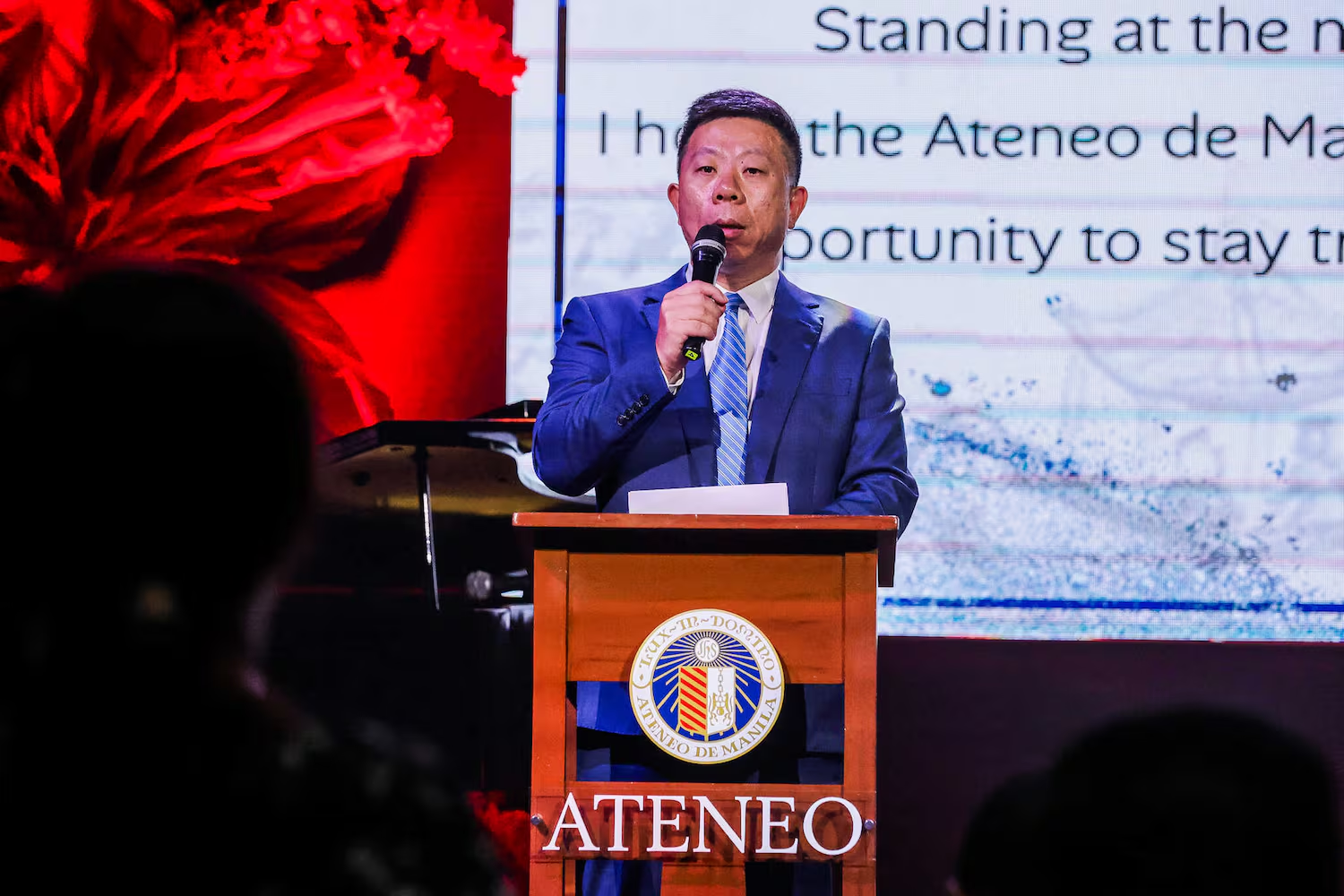
The number of affected teachers could be higher than initially disclosed. China’s Ambassador to the Philippines Jing Quan put it closer to 180 while delivering an address to the 20th anniversary celebration of the Confucius Institute at Ateneo de Manila University.

Jing also rejected allegations that Chinese-language education amounted to political infiltration, calling them “baseless and absurd.”
But Powell said in his report that he and Teodoro had concerns about China-linked education programs being tied to China’s United Front Work Department – the strategy and network by which Beijing projects its political influence overseas.
Reports and rhetoric
Maritime confrontation provided the backdrop, while specific developments involving a Chinese university helped trigger the scrutiny of the programs, Aniello Iannone, a lecturer in international relations and general secretary of the ASEAN Studies Center at Indonesia’s President University, told RFA.
“The spark came from a university symposium and a think-tank report,” he told RFA.
Iannone was referring to the symposium hosted in late June at Jinan University in Guangzhou, China, where scholars advanced a claim that Batanes, the Philippines’ northernmost province, belonged to China through Taiwan.

In July, Powell published a report on the SeaLight website that provided evidence linking Jinan University to training teachers for Chinese-language schools in the Philippines – 43 of 56 Filipino teacher trainees sent to China in 2024 through the Philippine Chinese Education Research Center, he said in the report.
The Filipino trainees were not the mainland Chinese teachers who were recalled, Powell told RFA.
“I haven’t found these programs directly teaching Beijing’s South China Sea claims, and I won’t allege it,” he said.
Instead, he argued that affiliated organizations can support Beijing’s objectives through broader political messaging, including appeals for peace and dialogue that he interprets as encouraging acceptance of Chinese pressure at sea.
Powell views the teacher recall as political pressure that directs anger over disrupted lessons toward Beijing’s critics. But he said he had not seen the teachers’ return linked to any Philippine concession over the South China Sea.
Iannone said the available evidence required more careful distinctions.
“Before acting, authorities should separate a structural link, such as who trained a teacher, from conduct, such as what was taught, and publish what they find,” he said.
Lessons from the U.S. backlash
The…
Read the rest of this article here >>> South China Sea tensions cause China to ‘recall’ teachers from the Philippines

