

China
China Uses Sun Yat-sen’s Legacy in Taiwan to Push for Reunification
Beijing is leveraging Sun Yat-sen’s legacy to advocate for “reunification” with Taiwan, framing it as a historical destiny. Analysts warn this strategy promotes anti-independence views, while Taiwan emphasizes its democratic identity honoring Sun’s ideals.
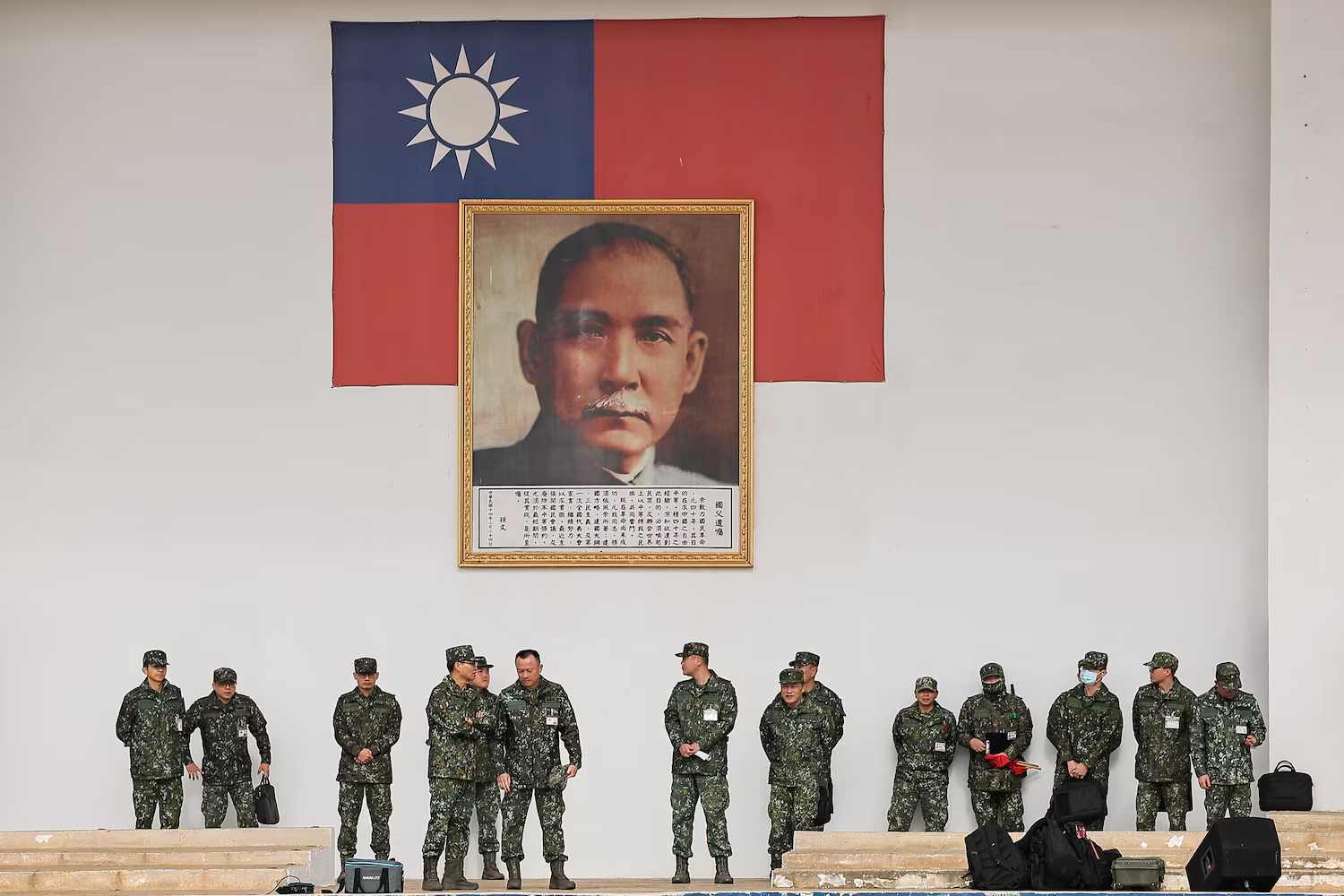
Beijing is trying to use national hero Sun Yat-sen – who is also revered in Taiwan – to frame “reunification” with the democratic island as the fulfillment of a common national destiny, analysts told Radio Free Asia.
Ahead of the 160th anniversary of Sun’s birth on Nov. 12, the mainland has planned official commemorations, and Taiwan’s government warned that Beijing was using the revolutionary leader’s legacy to further an “anti-independence, pro-reunification” strategy.
Taiwan considers Sun to be the “father of the country.” He helped lead the revolution that ended China’s imperial system and became the Republic of China’s first provisional president in 1912. The government of the Republic of China fled to Taiwan in 1949 when Chiang Kai-shek’s nationalists lost the Chinese Civil War to Mao Zedong’s communists. Taiwan still uses “Republic of China” as its official name.
In Beijing’s view, Sun is the “forerunner of the revolution.” Mao is considered to have continued in his footsteps, and the communist “People’s Republic of China” is said to be the realization of Sun’s unfinished vision. It is this version of history that China wants to push, Jozef Huljak, a political science doctoral candidate at Constantine the Philosopher University in Slovakia whose research examines Taiwan’s cultural and public diplomacy, told RFA.
“In my view, Beijing’s core strategy is a battle over words: if the world accepts its version of history, a takeover can be sold as ‘reunification,’” Huljak said.

Though China’s communist government has never governed Taiwan, it considers the democratic island to be a rogue province. It claims the island as its territory and has not renounced using force to bring it under Beijing’s control.
In addition to diplomatic and military pressure on Taiwan, China’s historical messaging promotes a national belonging intended to make political union appear both legitimate and inevitable.
China’s own policy documents describe history and culture as forces driving unification. A 2022 white paper on Taiwan presented national unity as a longstanding Chinese aspiration and tied its achievement to the country’s national rejuvenation.
Sun as a political tool
Sun’s connection to China’s Taiwan policy is explicit. Beijing organized the cross-strait Sun Yat-sen Forum in his ancestral birthplace in June, and about 1,300 Taiwanese participants attended.
At that event, Pan Xianzhang, a deputy head of China’s Taiwan Affairs Office, urged people on both sides to draw inspiration from Sun while adhering to the “one-China principle,” Beijing’s doctrine that asserts Taiwan is an inalienable part of China.
“Beijing’s use of Sun works because Taipei still props him up,” Huljak said.
But the same historical figure can carry different political meanings. During an April visit to Sun’s mausoleum in Nanjing, Cheng Li-wun, chairperson of Taiwan’s main opposition Kuomintang, or KMT, – the Nationalist party founded by Sun – invoked his legacy to advocate reconciliation and dialogue. She also pointed to Taiwan’s democratic development as an expression of his founding principles.

The KMT’s own account of the visit emphasized the continuation of Sun’s ideals in Taiwan and the promotion of peaceful cross-strait relations.
A broader repertoire
Sun’s birth anniversary is part of a wider pattern in which Chinese authorities connect history to a shared national identity and political unity with Taiwan.
Another figure honored on both sides of the strait is Zheng Chenggong, also known as Koxinga, who expelled the Dutch from Taiwan in 1662 and established a regime there. Beijing describes him as a national hero who recovered Chinese territory.
But in Taiwan the way Zheng is remembered depends on who you ask. For some, he is seen as analogous to Chiang Kai-shek, as both were military leaders who lost their respective…
Read the rest of this article here >>> China leverages Taiwan’s reverence for Sun Yat-sen to promote ‘reunification’


