

China
China Likely Conducted Targeted Campaign to Align Pacific with Five-Year Plan
A report by The Alliance Futures Initiative reveals that China likely coordinated a campaign in Pacific nations to promote alignment with its five-year plan. Chinese diplomats used media, direct meetings, and persuasive messaging on green development and economic cooperation to influence local governance.
China “very likely” coordinated a targeted campaign across the Pacific to demonstrate that local development strategies should align with Beijing’s latest five-year-plan, a recent report by The Alliance Futures Initiative says.
In the report, titled “China’s Model on the Offensive: Why China’s Five-Year Plan Promotion in the Pacific Matters,” the Washington-based think tank documented how in eight of the nine Pacific island countries where Beijing has an embassy, the heads of mission published op-eds in the local media touting the merits of China’s latest sweeping national policy framework proposed late last year and formally adopted in March.
“To international audiences, the PRC deliberately reframes the FYP from a domestic planning document into a predictable, scientific blueprint for global growth and cooperation,” the report said.
The campaign was not limited to media placement. Chinese diplomats also engaged in direct bilateral governance outreach, hosted diplomatic briefings – either open to the media or closed – with influential figures in business and government. The ultimate goal was to make the case that local development strategies were in line with the five-year plan, or that China was a more stable and reliable partner than its main rival with interests in the region, the United States.
The Alliance Futures Initiative, or TAFI, tracked the activities of Chinese Embassies since October 2025, finding more than 30 cases where ambassadors promoted the five-year plan.
“The frequency, similarity, and timing of output strongly imply MFA guidance,” the report said, referring to China’s Ministry of Foreign Affairs. “Variance in message intensity, ideological depth, and host-country alignment claims tracks local conditions and individual ambassador style.”
The power of persuasion
A key aspect of the campaign is how China is using persuasion rather than coercion to influence the Pacific countries to fall in line, Jonah Bock, TAFI’s assistant director for research, who authored the report, told Radio Free Asia.
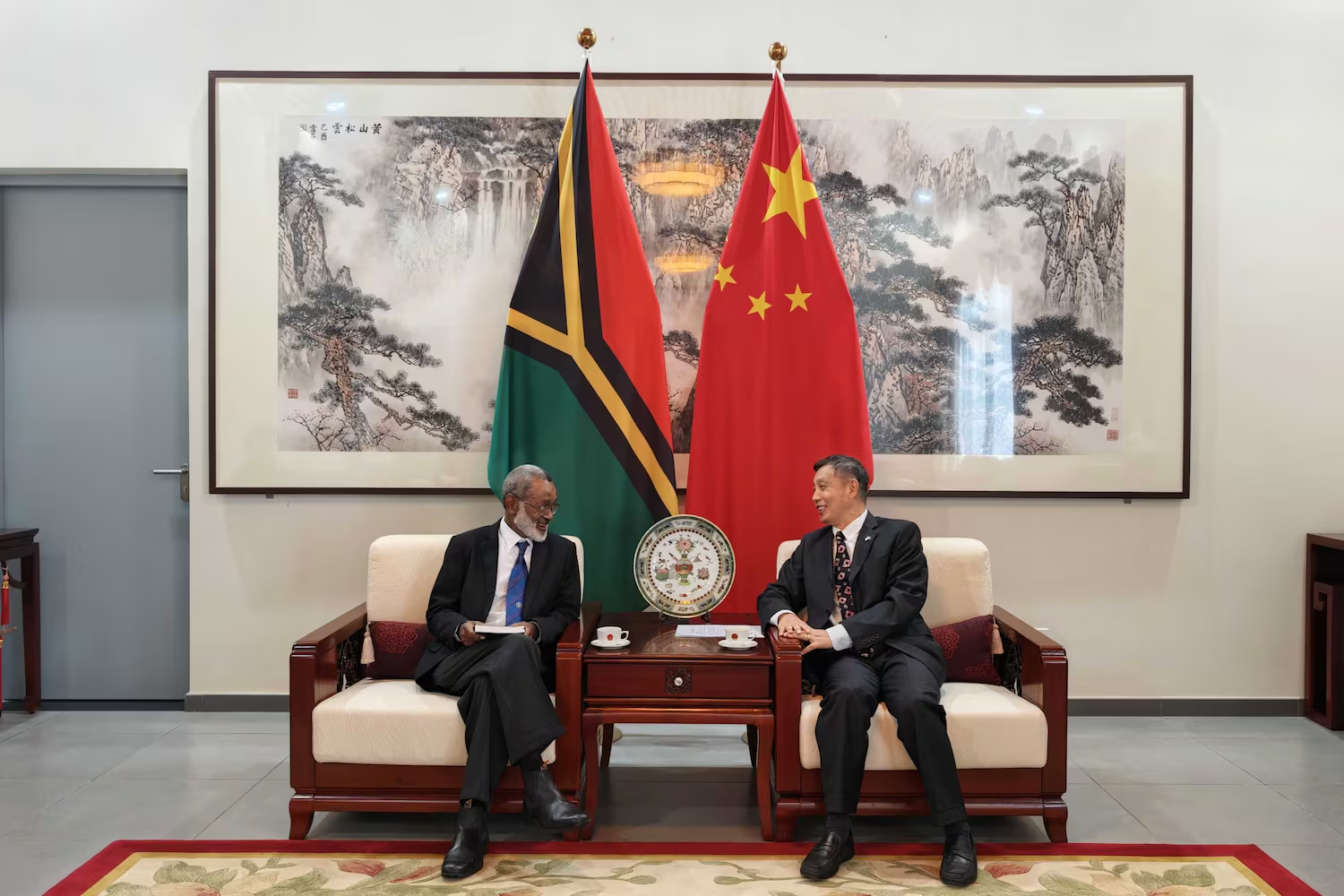
Bock highlighted key examples where China attempted to directly persuade key government officials. In Vanuatu, Ambassador Li Minggang extolled the virtues of China’s civil service oversight in a meeting with Ombudsman Hamilson Bulu and in Naoero, formerly Nauru, Ambassador Lyu Jin discussed judicial cooperation with Chief Justice Jay Udit.
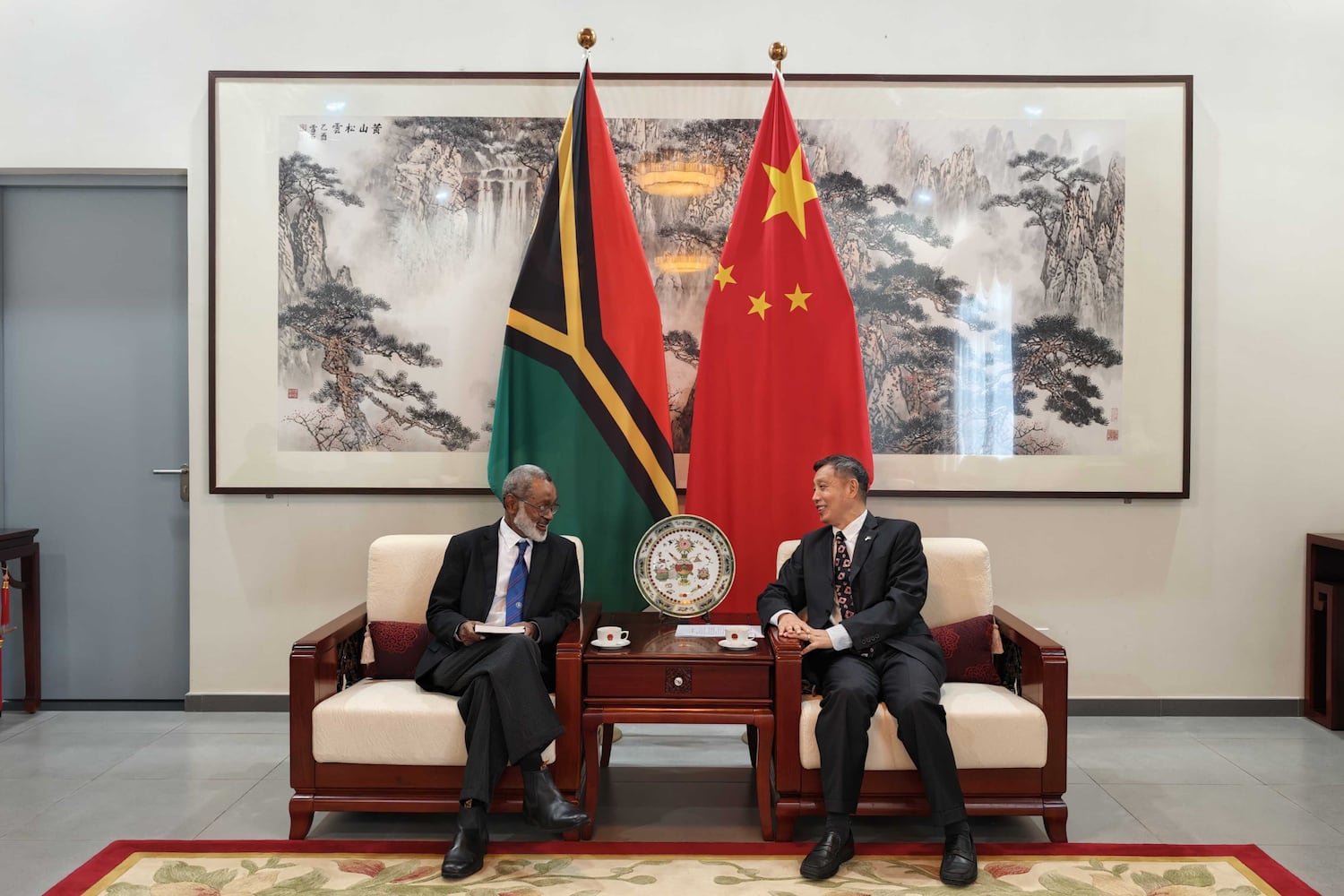
“An ombudsman audits the government and a judiciary constrains it,” he said. “So these are really helping shape how Pacific governments actually function in China’s own model. And the importance of this is really normalization.”
Successfully persuading these countries to peacefully adopt a Chinese model is the goal of the campaign, he said.
“Coercion is expensive and it generates resistance. But persuasion does not. It’s relatively cheap for China to do,” Bock said. “If they can get these countries already using China’s development strategies, its models, then these officials will start to think like China and be more willing of their own ideas to cooperate with China.”
Selling alignment
The TAFI report said that throughout the campaign, ambassadors focused on three topics when explaining why aligning with the five-year plan would benefit their host countries: green development, economic openness, and shared prosperity.
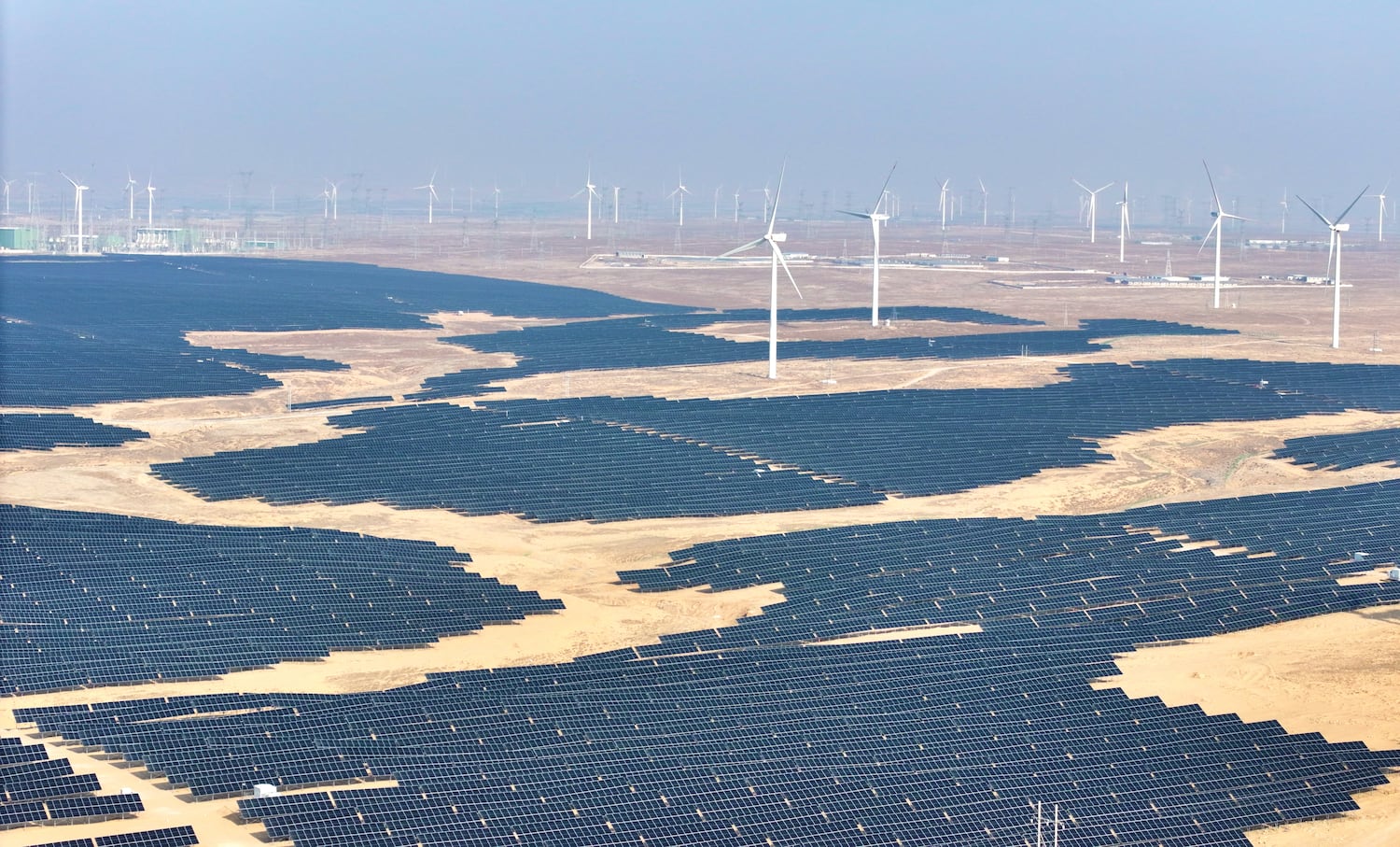
In Fiji, the Federated States of Micronesia, or FSM, and Tonga, the embassies pushed out messaging that touted China’s concern for the environment, saying Beijing had “contributed one-quarter of the world’s new green area” and built the “world’s largest clean power generation system.”
“Beijing tailored this message for climate-conscious Pacific audiences, with the FSM embassy noting that ‘green development has become a defining feature of contemporary China, where skies are bluer, waters are clearer, and lands are cleaner,’” the report said.
In Fiji and Papua New Guinea, or PNG, messaging also “championed” anti-protectionism, the report said.
“The Fiji embassy noted that China has ‘lifted all foreign investment restrictions in the…
Read the rest of this article here >>> China ‘likely’ ran targeted campaign to align Pacific with its latest five-year plan


