

China
Taiwan Downplays Scarborough Claim as Manila Relations Take Precedence
Taiwan faces a dilemma in the South China Sea as the Philippines strengthens its claims against China. While asserting its own claims, Taiwan seeks closer ties with Manila, crucial for countering Chinese aggression. However, its exclusion from the UN limits its influence.
Taiwan is trapped between sea rocks and a hard place: As the Philippines has filed documentation to strengthen its claims in the South China Sea, Taipei must balance asserting its own conflicting claims with building closer ties with Manila, especially as a potential ally against Chinese aggression, experts told Radio Free Asia.
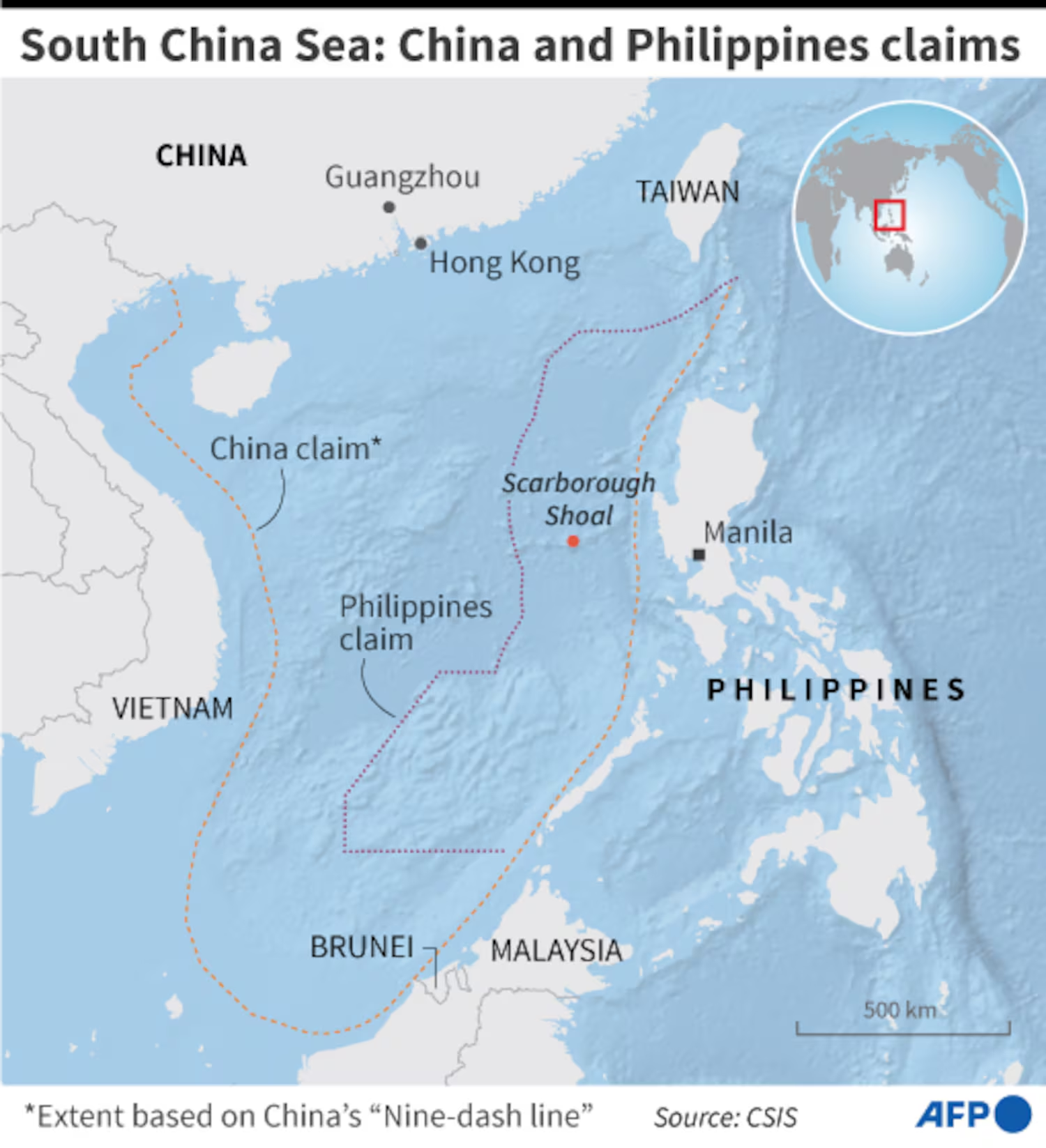
The Philippines on July 29 submitted its official nautical chart of Scarborough Shoal, a disputed feature in what Manila calls the West Philippine Sea – the section of the South China Sea that is within its exclusive economic zone – to the United Nations, to bolster its claim on the area, which is also claimed by China and Taiwan.
Beijing immediately protested the filing, accusing Manila of infringing on Chinese sovereignty.
Taiwan also opposed the move, but in a way that did not outright condemn the Philippines. It also repeated its call for Taiwan to be included in negotiations over South China Sea disputes.
“The filing adds specificity to a Philippine position that was already well established,” Sylwia M. Gorska, a doctoral candidate in international relations at the University of Central Lancashire in the United Kingdom, told RFA. “For Taiwan, the consequence is not the loss of its claim, but a further deterioration in its relative ability to make that claim consequential.”
The episode highlights an increasingly awkward tension for President Lai Ching-te’s government. That government considers itself to be the continuation of the Republic of China, or ROC, and thus continues to formally claim land it historically laid claim to, dating back to the era that it controlled the mainland, including Scarborough Shoal and other South China Sea features.
Meanwhile, the Philippines has become an increasingly important security partner as both governments contend with pressure from Beijing.
Official status
Unlike Manila and Beijing, Taipei is excluded from the United Nations and has limited ability to advocate for its claims via the same international processes being used by other claimants.
But Taiwan’s exclusion from the U.N. system does not invalidate its claim, Aadil Brar, a Taipei-based independent analyst and former visiting scholar at National Chengchi University, told RFA.
“The real problem is procedural rather than substantive,” Brar told RFA.
Taiwan can continue asserting sovereignty through Foreign Ministry statements and other diplomatic channels, he said, but cannot participate on equivalent terms in the international mechanisms through which Manila is formalizing its position.
That disadvantage is compounded by Taiwan’s lack of a physical role around Scarborough.
Gorska noted that China has exercised de facto control around the shoal since 2012 and sharply increased its Coast Guard presence there, while Philippine Coast Guard and fisheries vessels continue to challenge Chinese restrictions.
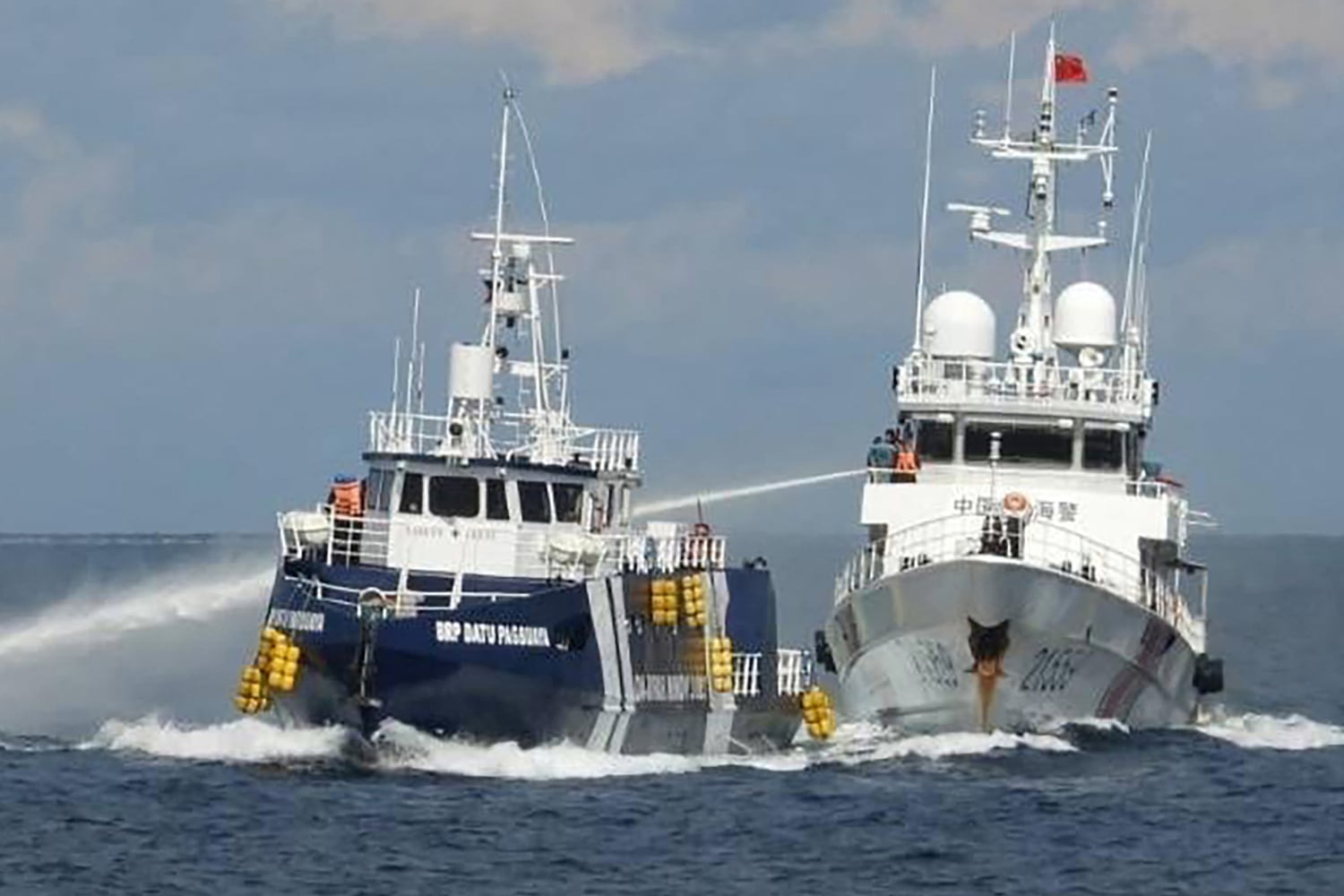
“In practice, Scarborough is now contested primarily by China and the Philippines,” she said. “They are the states maintaining presence, generating the confrontations and forcing decisions about how far coercion can go before it carries wider diplomatic or alliance consequences.”
“Taiwan remains a claimant, but it is largely absent from those day-to-day interactions and therefore has limited influence over the operational conditions around the shoal.”
Strategic restraint
Taiwan’s weak operational position gives Taipei little incentive to turn the Philippine filing into a serious bilateral dispute, analysts said.
The Philippines’ northern islands sit close to Taiwan and the Luzon Strait, a key maritime passage that could become strategically important in any cross-Strait conflict. The Philippines is also a U.S. treaty ally and has expanded military cooperation with Washington.
Gorska pointed to the deployment of the U.S. NMESIS anti-ship missile system in Batanes during this year’s Balikatan exercises as an example of the growing military relevance of the northern Philippines to Taiwan’s security environment.
“A more forceful Taiwanese…
Read the rest of this article here >>> Taiwan soft-pedals Scarborough claim as Manila ties take priority


