

China
U.S. Remains China’s Top Rival Despite Japan, Philippines Report
China views the U.S. as its main geopolitical rival, highlighting Washington’s allies, particularly Japan and the Philippines, in South China Sea military activities. Analysts suggest increasing pressure on these nations, as they threaten China’s maritime claims amid U.S. distractions.
China remains focused on the United States as its chief geopolitical rival, even though a recent Chinese report on military activity in the South China Sea highlighted the growing role of Washington’s allies in the region, experts told Radio Free Asia.
The report, published by the China-based South China Sea Strategic Situation Probing Initiative, or SCSPI, found that U.S. military activity in the South China Sea remained extensive in 2025, despite signs of operational strain due to Washington’s increased activity in the Middle East.
Although the SCSPI is not government-led, it is widely viewed by analysts as broadly reflecting Beijing’s strategic outlook, and the report indicated increased Japanese and Philippine deployment to the South China Sea.
“China increasingly views Japan and the Philippines’ efforts to deepen defense cooperation … as attempts by both countries to challenge China’s core interests and cross a red line,” William Yang, a Northeast Asia analyst at the Belgium-based International Crisis Group, told RFA.
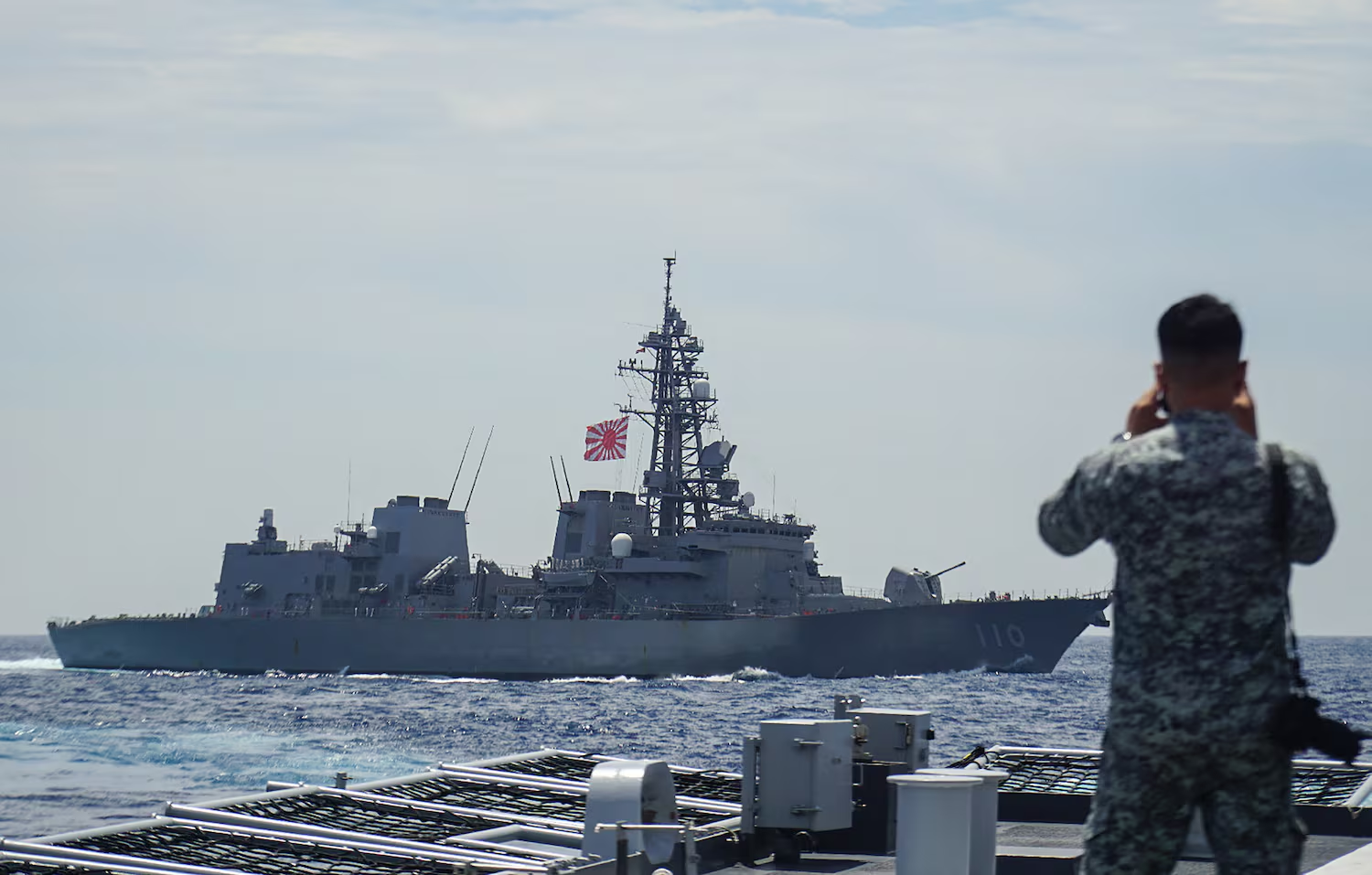
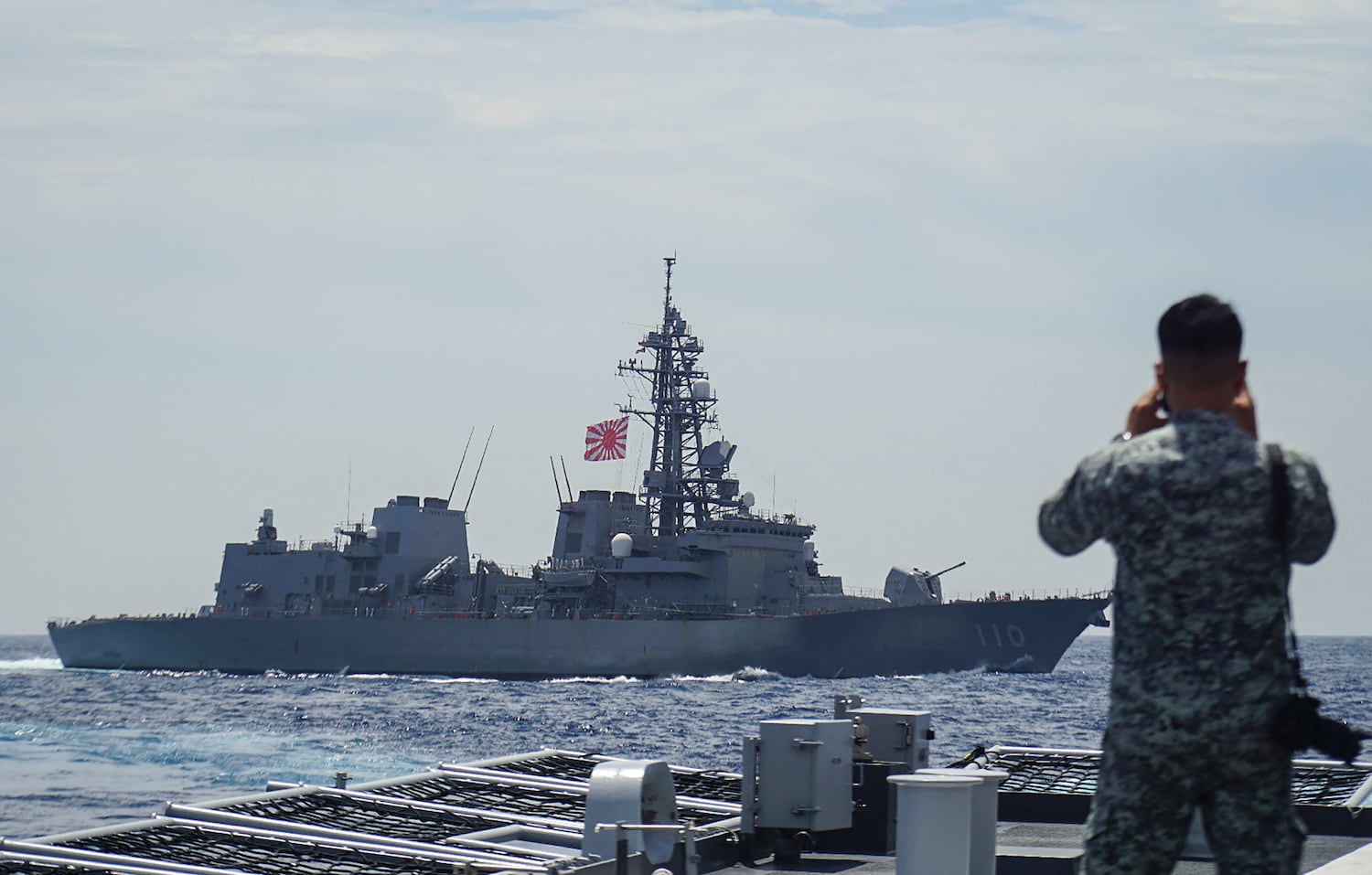
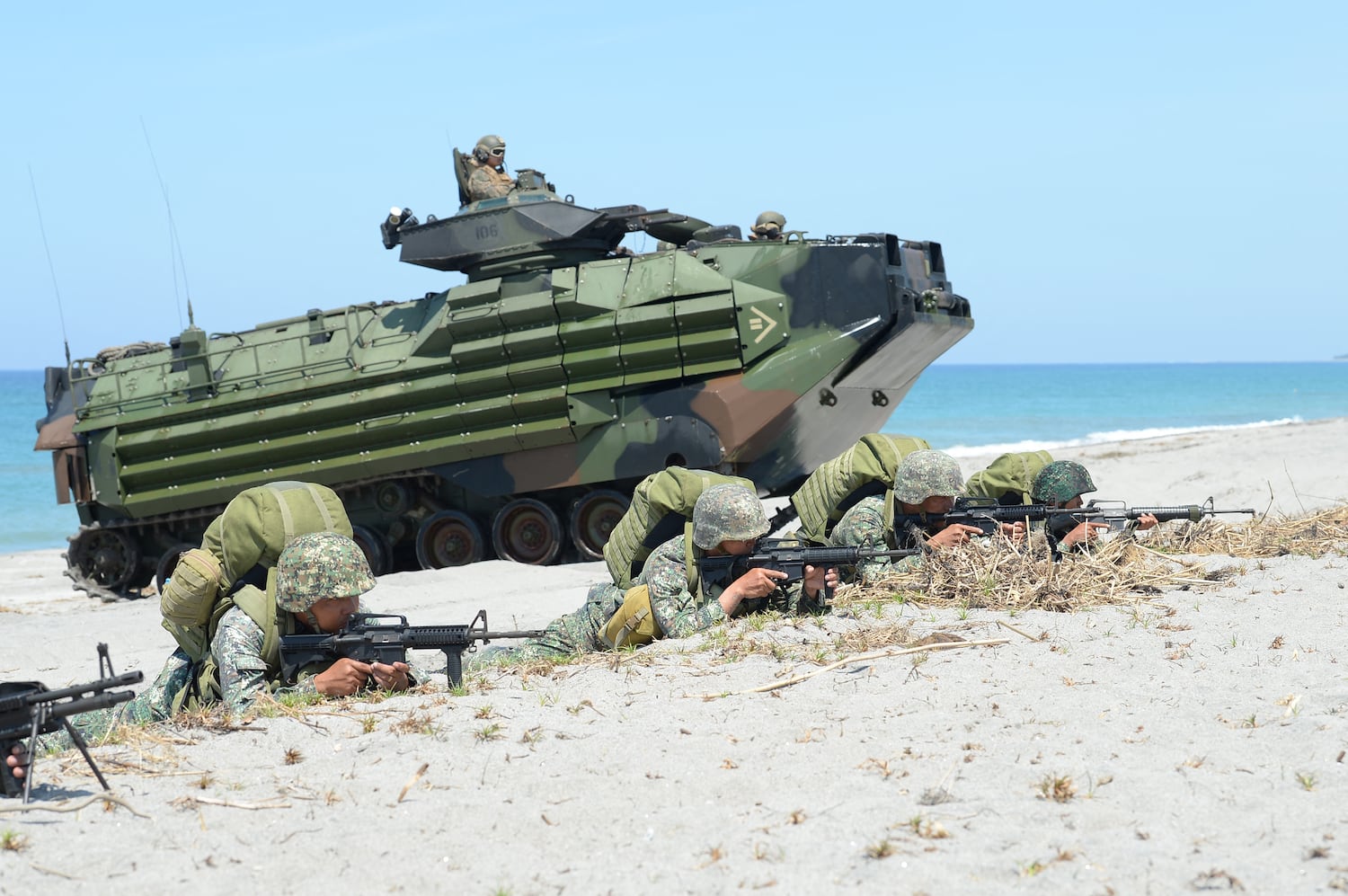
Japan participated in 71 U.S.-led exercises in and around the South China Sea last year – the highest number among U.S. partners – followed by the Philippines with 32, and Yang said the focus on Tokyo and Manila shows that Beijing considers Washington’s allies more formidable than in the past.
“They see both countries’ assertive approach toward maritime disputes with China as a threat to its maritime interests and sovereignty claims and believe it is necessary to start increasing pressure on both countries,” Yang said.
He added that Chinese officials have been “increasingly criticizing Japan and the Philippines for provoking regional instability by engaging on the Taiwan issue” and “have taken steps to increase economic and grey zone coercion against both countries in recent months.”
Washington distracted?
Despite the increased attention to Washington’s allies in the report, Beijing’s largest concern is still U.S. activities in the sea, Yang said.
“However, in light of the U.S.-China detente under Trump and Washington’s continuous entanglement in the Middle East, Beijing thinks it needs to seize this window of opportunity to increase pressure on particular U.S. allies in the region amid Washington’s distraction,” he said.
The SCSPI report concluded that indeed growth in some U.S. strategic platforms had slowed – It recorded nine U.S. carrier strike group deployments into the South China Sea in 2025, up slightly from eight the previous year, but said the overall intensity of carrier operations had declined because of extended deployments in the Middle East, maintenance demands, and operational accidents involving several carriers.
Analysts say the more significant issue for China is not the number of U.S. carriers entering the South China Sea, but how allied networks are making American military presence more persistent.
“The report focuses on Japan and the Philippines because they are two of the most important allied pressure points on China’s maritime perimeter, but they create different military problems for Beijing” Sylwia M. Gorska, a Ph.D candidate in international relations at the University of Lancashire in the United Kingdom, told RFA.
Multilateral containment?
She said that the Philippines represents China’s “forward-access problem, pointing to its proximity to the disputed Scarborough Shoal and Spratly Islands, the Luzon Strait, the Bashi Channel and Taiwan’s southern approaches.
“From Beijing’s perspective, the Philippines is no longer only a South China Sea claimant,” she said, “It is becoming a practical access and surveillance platform.”
She said Manila’s increased surveillance capabilities would be useful for intelligence, surveillance and reconnaissance flights, or ISR; maritime-domain awareness; joint patrols, logistics; missile-capable deployments; and crisis response along the…
Read the rest of this article here >>> U.S. still China’s main rival despite report on Japan and Philippines’ capabilities


