

China
Quad’s Fiji Port Plan Challenges China’s Pacific Supply Chain Dominance
The U.S., Japan, India, and Australia’s joint investment plan in Fiji’s port infrastructure aims to counter China’s influence in the Pacific. This initiative offers Pacific island nations alternatives to Chinese loans, mitigating debt-trap risks through grants, enhancing regional trade and security.
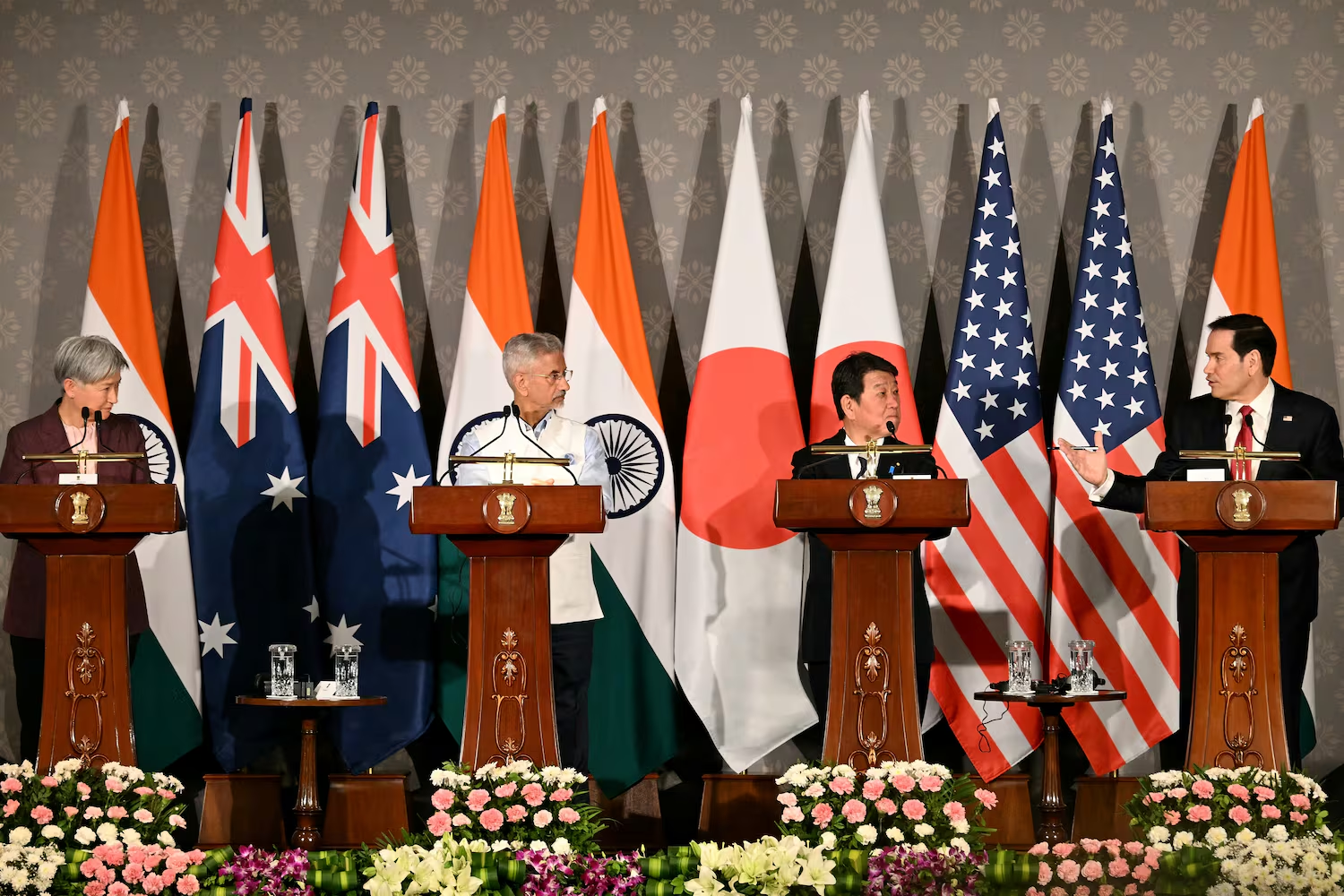
A plan by the United States, Japan, India and Australia to collaboratively invest in port infrastructure in Fiji is a step towards challenging China’s hegemony over supply chains in the region while simultaneously signaling to Pacific island countries that the four regional powers can give them a better deal than Beijing can, experts told Radio Free Asia.
The plan was unveiled earlier this week in New Delhi, after a meeting of foreign ministers of member nations in the Quadrilateral Security Dialogue alliance, or Quad.
Fiji was likely chosen because of its strategic location as a convergence point for many global shipping lanes, Gregory Brown, director of the Alliance Futures Initiative, a Washington-based think tank, told RFA.
“Fiji sits at the crossroads of the South Pacific and is the natural logistics hub for everything moving between Australia, New Zealand, and the wider island chain,” said Brown. “If you’re going to build one port that serves the whole Pacific, you build it where the shipping lanes converge—and that is Suva, the fulcrum for the region.”
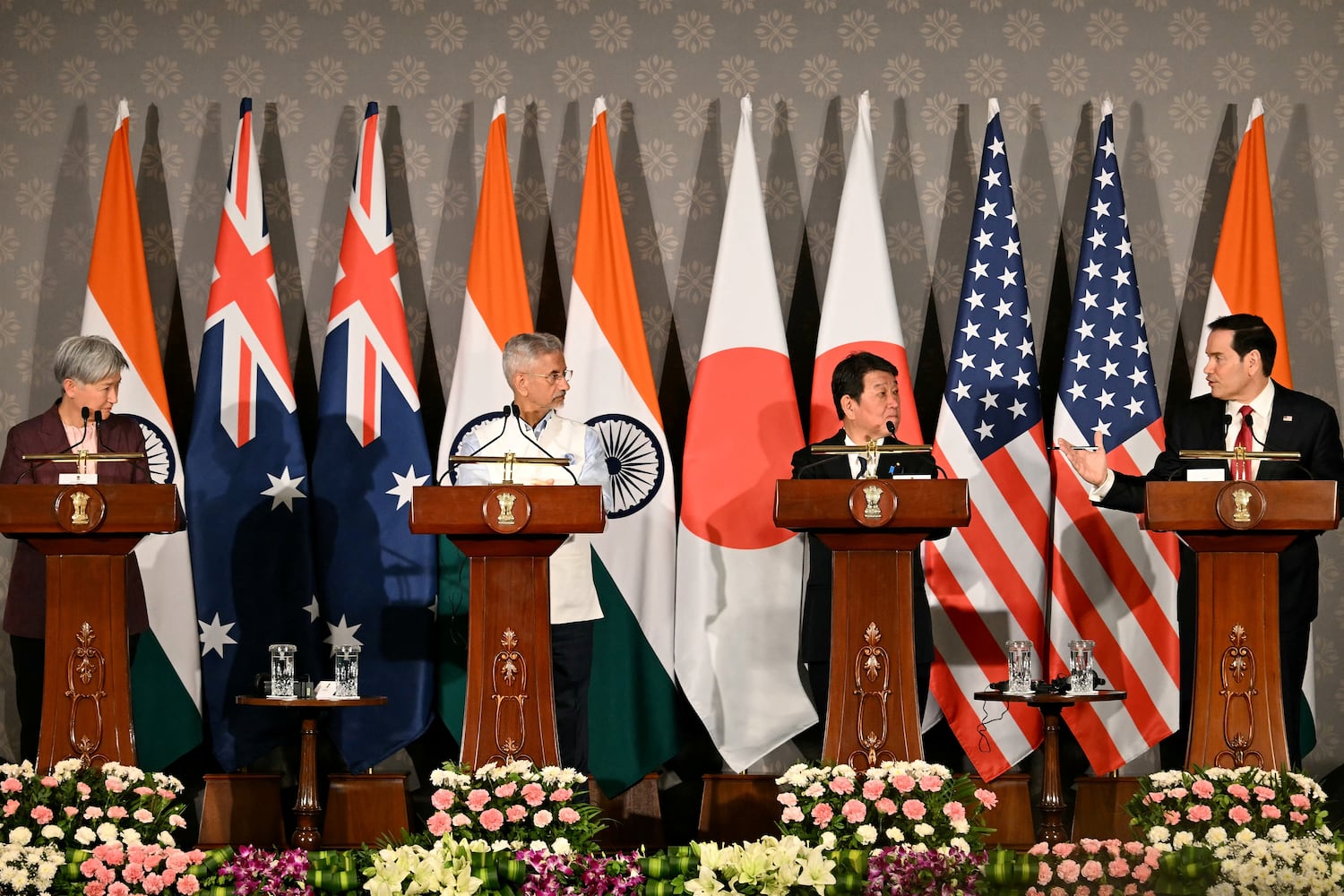
According to a fact sheet published by the U.S. State Department, the Tuesday’s meeting focused on maritime and transnational security, economic prosperity and security, critical and emerging technology, and humanitarian assistance and emergency response.
“Following the Quad Ports of the Future Partnership conference hosted in India in October 2025, the Quad committed to identifying critical port projects that it can support to increase trade and economic prosperity by increasing port infrastructure and capacity for key Indo-Pacific corridors,” the fact sheet said.
“As such, we are proud to announce that the Quad countries will work with the Government of Fiji, to advance port infrastructure and associated activities in the country.”
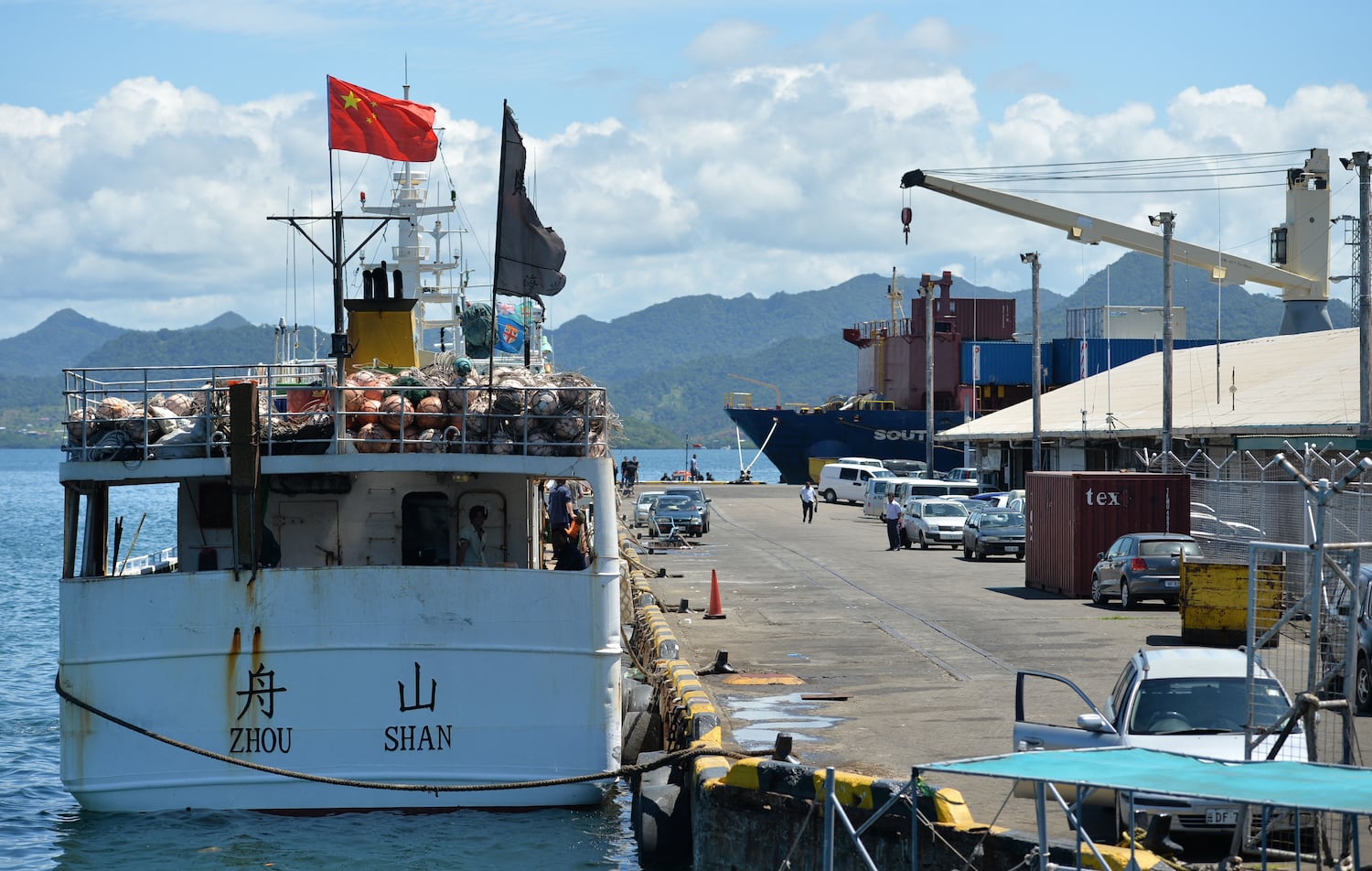
The port project would be a major Western infrastructure project in a region that has seen increasing investments from China in recent years, as Beijing and the West jostle for geopolitical influence.
Avoiding “debt-traps”
Through the port project, the Quad hopes to send a message to Fiji and other Pacific island countries that there are alternatives to working closely with China.
In recent years, Beijing has been aggressively investing in Pacific island infrastructure as part of its Belt and Road Initiative.
The plan has been criticized as a “debt-trap”—partner countries borrow heavily to finance bridges, roads or seaports, but when they struggle to repay, China gains leverage and control.
Fiji owes roughly US$110 million to Chinese state banks, or about 6.5% of its external debt, according to its Ministry of Finance. While this figure is relatively small compared to other creditors like Japan (9.7%) the World Bank (36.3%) and the Asian Development Bank (38.7%), the nature of loans from the other major creditors are “highly concessional,” and have longer payback windows than the Chinese loans.
“China’s model in the Pacific is loans,” said Brown. “The debt becomes a strategic instrument.”
Brown noted that the Quad’s plan is to fund the Fiji port project primarily through grants, allowing Suva to avoid falling into a debt-trap.
“China lends, the Quad gives,” he said. “For a country the size of Fiji, that’s the entire calculation.”
China also provides grants to international partners, but only at a fraction of the United States. According to a March 2025 report by the Washington-based Brookings Institution, Chinese aid spending totaled about 14.6% of that of the United States between 2013-2018, and grants totaled 47.3% of this aid.
The report said that grants are “traditional foreign aid projects in the Western definition” and said that it was a “common misperception” that China’s Belt and Road Initiative is aid.
Still, the prospect of a partnership with Beijing for these projects is attractive. Brown recalled how Fijian Prime Minister Sitiveni Rabuka toured ports during a visit to China in 2024 and discussed potential partnerships for port modernization.
“The Quad…
Read the rest of this article here >>> Quad’s Fiji port plan will challenge China’s Pacific supply-chain dominance


